SQL Cloud Accounting: The Real Pros and Cons Every Business Owner Should Know
Cloud accounting is no longer a passing trend. It has become a modern necessity for businesses seeking efficiency, accessibility, and accuracy in financial management. Among the many accounting systems available in Malaysia, SQL Account Cloud has gained strong attention for its local support, user-friendly design, and compatibility with Malaysian regulations.
However, as with any system, there are both benefits and limitations that businesses should carefully consider before making the switch. This article explores the real pros and cons of SQL Account Cloud and helps you decide whether it is the right fit for your company.
What is SQL Account Cloud?
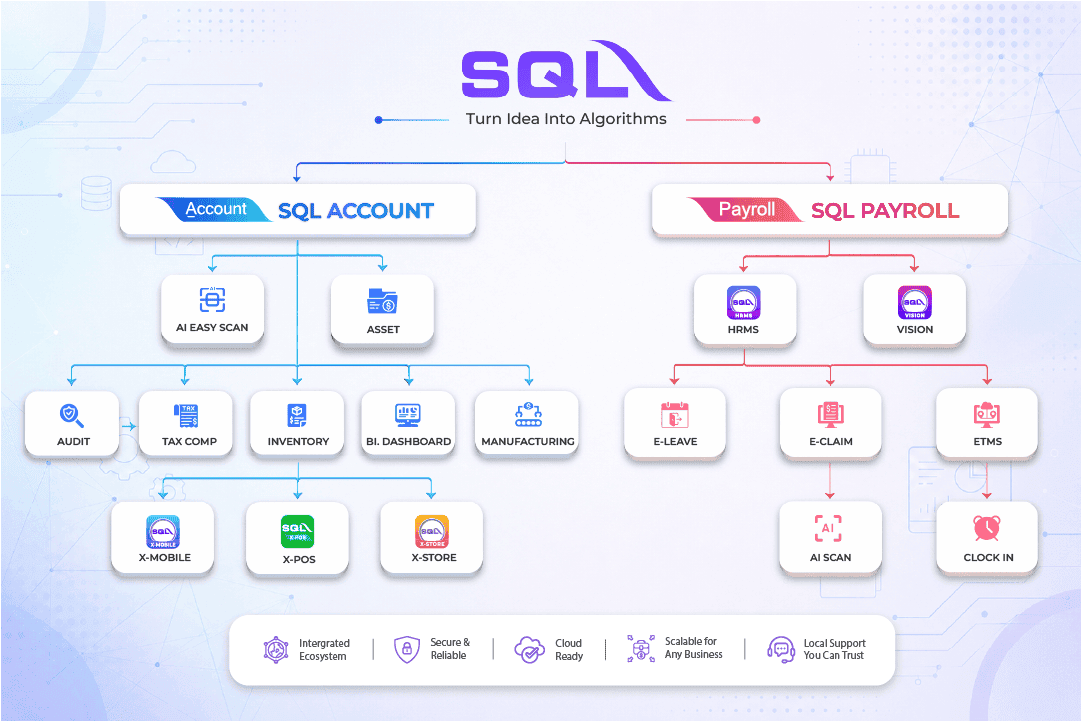
SQL Account is one of Malaysia’s most widely used accounting software systems. It has helped countless small and medium-sized enterprises manage financial transactions, inventory, payroll, and taxation with ease. The introduction of SQL
Account Cloud brings this trusted software to the next level by moving it into an online environment.
SQL Account Cloud is a fully online accounting platform that provides real-time access to financial data anywhere and anytime. This flexibility is one of its main advantages. Business owners, accountants, and managers can now monitor invoices, issue receipts, or generate reports without being physically present in the office. All they need is an internet connection and a web browser.
Beyond convenience, SQL Account Cloud offers unlimited storage, unlimited invoicing, full database ownership, and local customer support that understands Malaysian business laws. These features make it particularly appealing to companies that value both flexibility and compliance with Malaysia’s Sales and Service Tax (SST) requirements.
The Advantages of SQL Account Cloud
Choosing the right accounting system can define how efficiently your business operates. SQL Account Cloud stands out not only for its technology but for its ability to simplify daily accounting while ensuring compliance with Malaysian standards.
| ADVANTAGE | OVERVIEW |
|---|---|
| ACCESSIBILITY AND FLEXIBILITY | SQL Account Cloud is completely online. Users can log in from any device with internet access, such as laptops, tablets, or smartphones. This flexibility supports businesses with multiple outlets or remote teams that need to collaborate efficiently across locations. |
| DATA OWNERSHIP AND CONTROL | Unlike many international cloud providers that restrict access to user data, SQL Account Cloud ensures that businesses maintain full ownership of their databases. Users can retrieve their financial data even if they discontinue the service, ensuring peace of mind and avoiding vendor lock-in. |
| SCALABILITY AND UNLIMITED USAGE | SQL Account Cloud allows unlimited invoices, receipts, and database storage. This scalability supports growing companies that manage large transaction volumes without the worry of hidden limits or extra charges. |
| LOCAL COMPLIANCE AND DEDICATED SUPPORT | SQL Account Cloud is developed and maintained in Malaysia. It complies with local taxation standards and supports SST reporting aligned with the Royal Malaysian Customs Department. It is also prepared for the national e-Invoice rollout scheduled for July 2026, ensuring businesses remain compliant as the digital economy evolves. |
| REDUCE IT MAINTENANCE COSTS | Because SQL Account Cloud operates online, there is no need to purchase or maintain physicalservers, perform manual software updates, or configure internal networks. This lowers IT expenses and makes the solution particularly practical for small and medium enterprises. |
The Limitations and Challenges of SQL Account Cloud
While SQL Account Cloud offers strong advantages, it also presents certain challenges that businesses should review these limitations and challenges before adopting it.
| ADVANTAGE | OVERVIEW |
|---|---|
| INTERNET DEPENDENCY | The software relies entirely on an active internet connection. In areas with unstable connectivity, users may face temporary difficulties accessing data or completing transactions. |
| PERFORMANCE WITH LARGE DATA VOLUMES | Although SQL Account Cloud provides unlimited storage, performance may vary depending on the internet speed. Companies that handle heavy transaction loads could experience slower responses during peak periods if the network is not strong. |
| MIGRATION AND SETUP PROCESS | Moving from the on-premise SQL Account to the cloud version involves migrating existing data and configuring the system. SQL offers migration support, but businesses with customised setups may require additional time or professional help to complete the process smoothly. |
| SUBSCRIPTION COSTS AND LONG-TERM VALUE | SQL Account Cloud follows a subscription-based model. While this reduces upfront costs and simplifies budgeting, companies should consider long-term expenses over multiple years to ensurethat subscription payments align with their financial plans. |
Is SQL Account Cloud Worth It for Malaysian Businesses?